






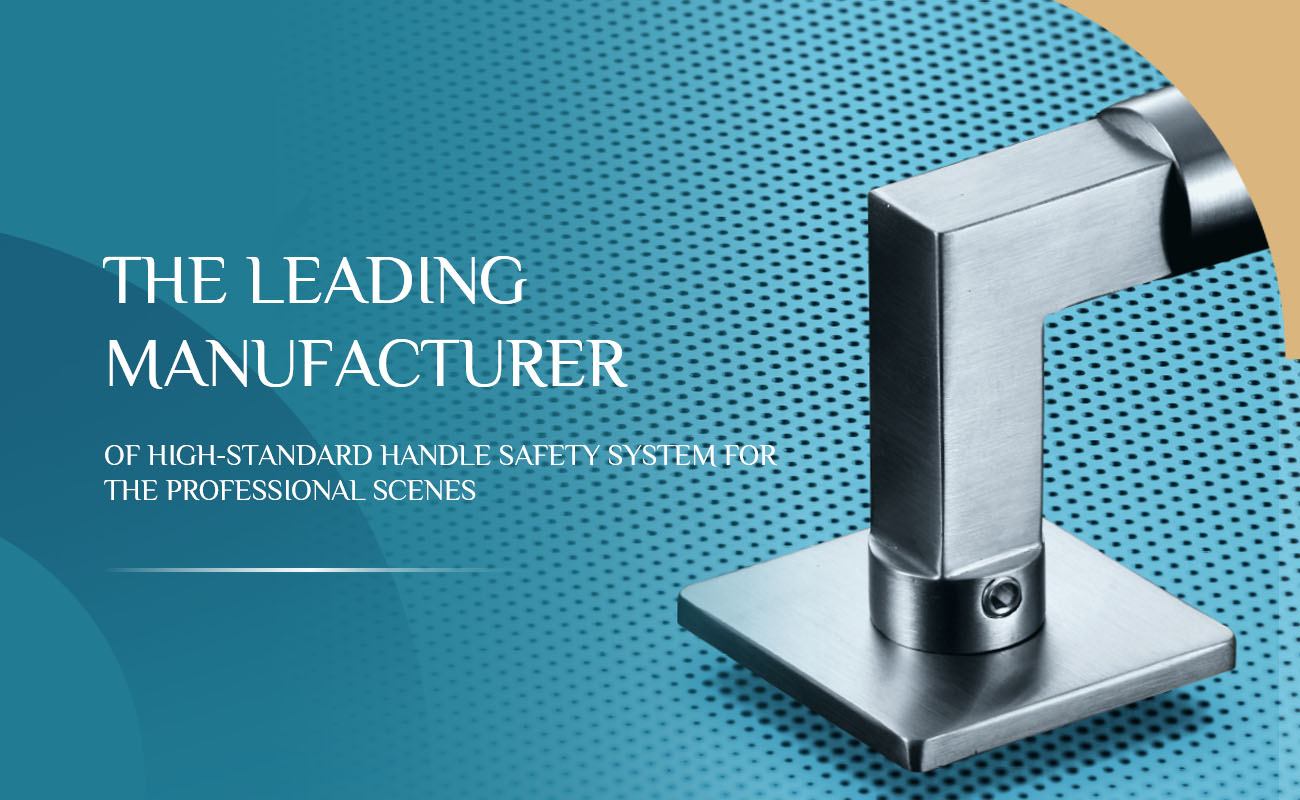
A passage door handle is a non-locking door hardware solution designed for interior spaces where privacy or security is not required. It allows free rotation of the handle on both sides, retracting the latch to open the door without any locking function.
Passage handles are commonly used in hallways, closets, living rooms, and interior circulation areas in residential and commercial buildings. While structurally simple, their long-term performance depends heavily on internal mechanical precision, material standards, and manufacturing control.
From a manufacturer’s perspective, passage handles represent a core architectural hardware category where consistency, durability, and large-scale supply reliability are critical.
How A Passage Door Handle Works
The mechanical structure of a passage handle is straightforward:
The lever or knob rotates when force is applied.
A square spindle connects both sides of the handle.
The spindle turns the latch mechanism.
The latch retracts into the door edge.
Releasing the handle allows the spring to return it to its original position.
Unlike privacy or keyed-entry handles, passage handles do not include locking cams or key cylinders.
Because there is no locking mechanism, structural simplicity reduces potential failure points — but mechanical precision remains essential for smooth operation.
Where Passage Door Handles Are Used
Passage handles are ideal for:
Interior hallway doors
Closet doors
Pantry or storage rooms
Utility spaces
Open-plan office areas
They are typically installed in high-frequency usage environments. Therefore, rotational smoothness and return spring durability are key quality indicators.
Key Structural Components
A standard passage door handle assembly includes:
Lever or knob body
Square spindle shaft
Internal spring return mechanism
Tubular latch
Mounting plate system
Although there is no locking component, spindle tolerance and spring calibration directly influence performance stability.
Handles that sag over time often suffer from weak spring tension or inaccurate machining of the spindle interface.
Manufacturer’s Perspective: Why Quality Still Matters
Because passage handles do not include complex locking systems, some assume they are low-risk hardware components. In reality, high-cycle operation in residential and commercial projects demands:
Consistent rotational torque resistance
Reinforced spindle material
Durable internal spring structure
Corrosion-resistant surface treatment
Stable mounting plate reinforcement
Bulk installations amplify even minor structural weaknesses. Poor dimensional control across batches can result in inconsistent handle alignment or premature loosening.
Integrated manufacturing control ensures repeatable quality across large project deliveries.
Material Standards Commonly Used
High-performance passage handles typically incorporate:
Stainless steel for corrosion resistance and structural integrity
Hardened steel spindles for torque durability
Fatigue-resistant spring steel
Reinforced mounting plates for stability
Material selection directly influences lifecycle performance and maintenance frequency.
Performance Expectations in Commercial Projects
In large residential or commercial developments, passage handles are expected to:
Withstand repeated daily operation
Maintain horizontal lever alignment
Provide smooth rotational feedback
Resist surface wear and corrosion
Maintain structural stability over years of use
Mechanical endurance testing during production is an important indicator of long-term reliability.
Decision Guidance for Project Specification
When specifying passage door handles for bulk supply, consider:
Spindle dimensional tolerance control
Spring return durability
Surface finish durability under cleaning
Mounting plate thickness and rigidity
Consistency across repeat production batches
The absence of a lock does not eliminate the need for engineering precision.
Lifecycle Cost Perspective
Replacing passage handles across a multi-unit project due to sagging levers or loose mounting systems can generate unnecessary maintenance cost. Selecting hardware manufactured under structured process control reduces long-term service calls.
Well-engineered passage handles provide:
Stable mechanical operation
Reduced maintenance intervention
Consistent aesthetic appearance
Predictable lifecycle performance
Conclusion
A passage door handle is a non-locking interior hardware solution designed for areas where free access is required. Although mechanically simple, its durability depends on spindle precision, spring calibration, material standards, and manufacturing discipline.
From a manufacturer’s standpoint, consistent structural engineering and quality control ensure that passage handles deliver stable, long-term performance across high-frequency use environments and large-scale installations.