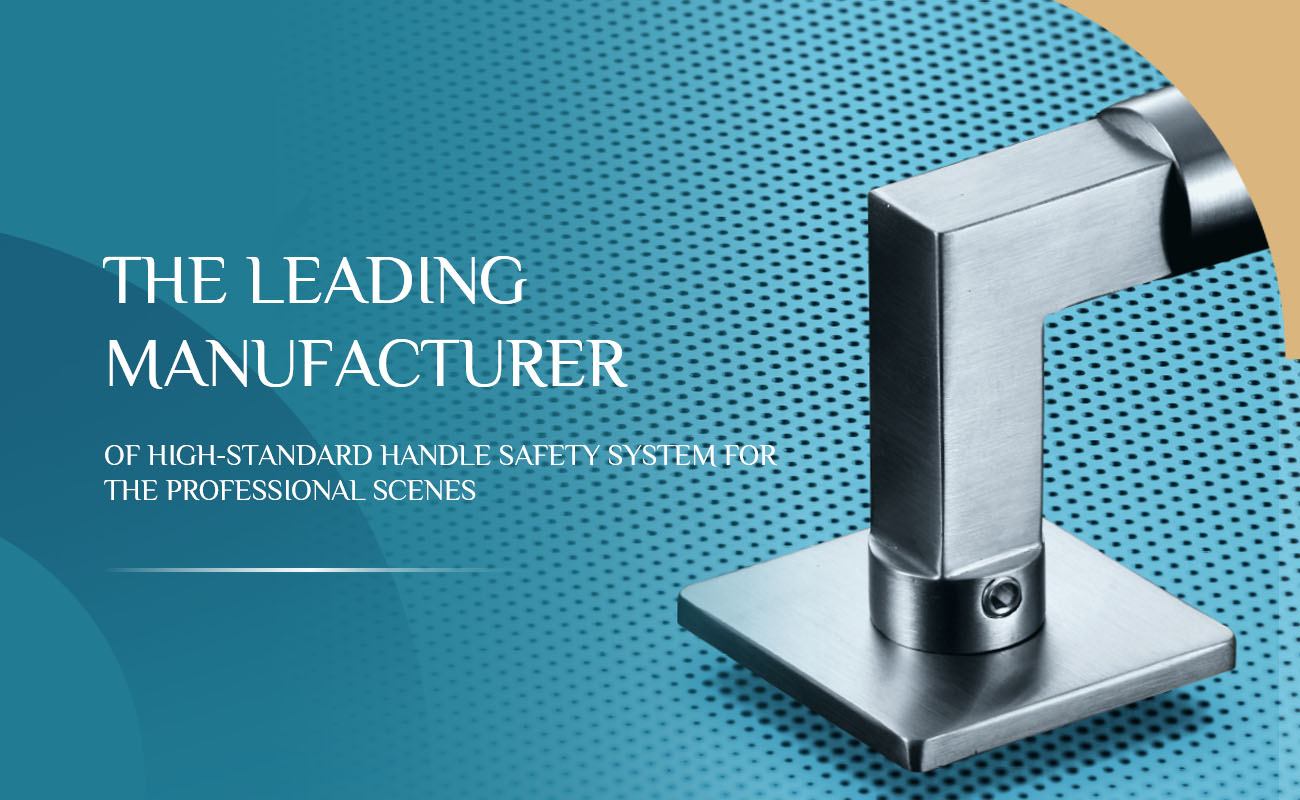
Commercial door handles are typically heavier-duty and built with reinforced internal mechanisms compared to residential models. Removal depends on the handle type — lever set, mortise lock, cylindrical lock, or pull handle system. Because commercial hardware is engineered for high-frequency use, concealed fasteners and secure mounting plates are common.
From a manufacturing standpoint, commercial handles require tighter tolerance control, stronger internal springs, and higher load-bearing validation. As a professional architectural hardware manufacturer, Hangfat Metal produces commercial-grade door handle systems with precision machining and structural durability testing for large-scale projects.
Step 1: Identify the Handle Type
Common commercial configurations include:
Lever handle with cylindrical lock
Mortise lock system
Concealed mounting pull handle
Panic or exit device integration
Correct identification ensures proper removal without damaging components.
Step 2: Remove the Lever (If Applicable)
Most commercial Lever Handles use one of these mechanisms:
A. Release Pin System
Locate the small hole near the lever base
Insert a thin tool to depress the internal detent
Pull the lever straight off
B. Set Screw System
Locate the recessed set screw underneath the lever
Use the correct hex key to loosen
Slide the lever off the spindle
Manufacturers design these systems for secure but serviceable installation.
Step 3: Remove the Decorative Cover Plate
After removing the lever:
Gently pry off or rotate the rosette cover
Expose the mounting screws underneath
Unscrew both sides evenly
Precision machining ensures tight cover fit without visible fasteners.
Step 4: Separate Both Sides of the Handle
Once mounting screws are removed:
For mortise systems, additional screws on the door edge must be removed.
Step 5: Inspect Internal Components
During removal, check for:
Worn spindle
Damaged springs
Corrosion
Misalignment
Commercial hardware is often designed for maintenance rather than full replacement.
Manufacturer vs Trader: Why Commercial Hardware Precision Matters
Commercial door handles operate under high usage cycles. A manufacturer controls:
CNC-machined internal components
Spindle tolerance accuracy
Spring tension calibration
Load-bearing validation
Surface treatment durability
Inconsistent tolerance or weak internal assembly can complicate removal and reinstallation. Traders often lack full mechanical cycle testing validation.
Manufacturing Process Overview
Professional commercial handle production typically includes:
Material selection (stainless steel, zinc alloy, brass, or aluminum)
Forging or casting
CNC machining for internal precision
Surface finishing (brushed, polished, powder coated, or plated)
Mechanism assembly
Load and cycle testing
Controlled production ensures structural integrity under repeated commercial use.
Quality Control Checkpoints
Critical inspection stages include:
Dimensional tolerance verification
Spring durability testing
Torque resistance validation
Corrosion resistance testing
Repeated opening cycle testing
These checkpoints ensure smooth removal and reinstallation during maintenance.
Safety & Project Considerations
Before removal:
Ensure the door is unlocked
Verify there is no active security system connected
Confirm correct tools are used
Maintain alignment to prevent door damage
For large projects, standardized handle systems simplify maintenance and replacement planning.
Conclusion
To remove a commercial door handle, identify the handle type, detach the lever via release pin or set screw, remove the cover plate, unscrew the mounting assembly, and separate internal components carefully. Commercial hardware is engineered for durability and serviceability, and precision manufacturing ensures easier maintenance, consistent alignment, and long-term performance in high-traffic environments.