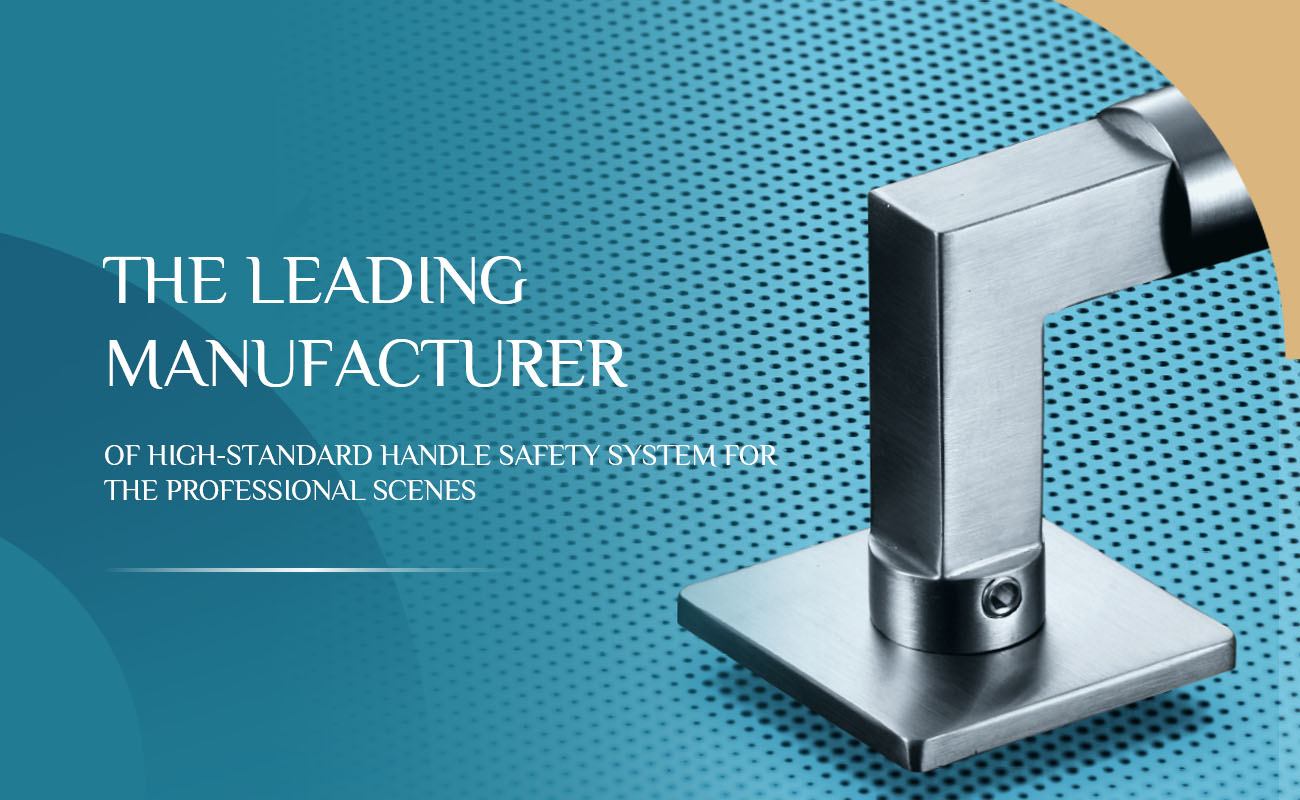
Removing a commercial door handle is not just a maintenance task. In high-traffic buildings, the handle, spindle, rose, Latch, and mounting plate work as one performance system, so the removal process often reveals whether the product was engineered for long service life or only for short-term appearance. Commercial hardware is built for heavier use than standard residential sets, and HANGFAT positions itself as a lever handle manufacturer supplying stainless steel handles, turn knobs, back plates, Locksets, and related architectural hardware for these applications.
What Makes Commercial Door Handles Different
Commercial door handles are usually designed with reinforced inner structures, stronger fixing methods, and concealed mounting points. HANGFAT’s own article on this topic notes that removal depends on the hardware type, including lever sets, mortise locks, cylindrical locks, and Pull Handle systems, and that concealed fasteners and secure mounting plates are common because commercial hardware is engineered for high-frequency use. That design logic matches broader industry expectations: ANSI Grade 1 commercial locksets are widely associated with 1,000,000-cycle performance, while EN 1906 classifies heavy-use lever furniture at up to 200,000 cycles.
Basic Steps To Remove Commercial Door Handle
The correct process starts by identifying the mounting style. First, inspect the lever or trim for visible screws, a small release hole, or a concealed rose cover. Second, remove the lever by loosening the set screw or release mechanism. Third, take off the decorative rose or escutcheon to expose the mounting screws. Fourth, separate the inside and outside handle assemblies and then remove the spindle and latch components if needed. HANGFAT’s removal and replacement guides describe this sequence clearly and also stress that the old bore holes and door prep should not be damaged during removal, because clean preparation makes reinstallation faster and more accurate.
Why Removal Problems Happen
When a commercial door handle is hard to remove, the issue often comes from the original installation or from long-term wear. Overtightened screws, corrosion around the mounting points, worn spindle engagement, distorted mounting plates, and latch misalignment all make disassembly more difficult. In busy doors, small dimensional errors become more visible over time. That is why removal is also a quality check. A handle that comes apart cleanly usually comes from a product with better machining accuracy and more stable internal structure. EN 1906 durability levels show how strongly repeated use affects door furniture in real environments.
Manufacturer Vs Trader In Commercial Hardware Supply
This is where manufacturer vs trader becomes important. A trader can offer multiple styles, but a manufacturer controls material sourcing, machining tolerance, welding or casting quality, surface treatment, assembly, and final inspection in one chain. HANGFAT presents itself as a direct manufacturer rather than only a reseller, and its product catalog shows lever handles, locksets, and stainless steel handle systems built around standardized hardware applications. For project buyers, that means better batch consistency, easier replacement matching, and fewer installation surprises across large orders.
OEM And ODM Process Before Mass Production
For commercial projects, OEM and ODM process control matters long before installation. In OEM work, the factory follows the buyer’s drawings, Lockcase requirements, finish targets, and dimensional standards. In ODM work, the manufacturer can improve the handle structure, fixing system, and serviceability based on the actual project environment. HANGFAT’s published installation guidance links OEM and ODM capability with bulk project supply and notes that higher monthly throughput supports lead time control for large orders. This is useful for schools, offices, hospitality projects, and public buildings where replacement and maintenance efficiency matter.
Manufacturing Process Overview And Quality Control Checkpoints
A reliable commercial door handle depends on more than the visible lever. HANGFAT’s materials article explains that door handles are made from metals selected for strength, corrosion resistance, appearance, and cost efficiency, and its product pages highlight SUS304 stainless steel, PVD options, and lockcase-compatible systems. In practical manufacturing, key quality control checkpoints include raw material inspection, dimensional verification, spindle fit, torque stability, finish inspection, and durability testing. These checks matter because a handle that removes and reinstalls cleanly usually comes from a better-controlled production process.
Material Standards Used And Export Market Compliance
Material standards used in commercial handles directly affect service life. Stainless steel remains a strong option where corrosion resistance and structural stability are required, especially in heavy-use or humid environments. For export market compliance, North American projects often look at ANSI/BHMA performance expectations, while European projects commonly reference EN 1906 durability classifications for lever handle and knob furniture. Reviewing these standards together with door prep, lockcase fit, and finish requirement helps reduce claims after shipment and improves acceptance in long-term export supply.
Project Sourcing Checklist
Item | What to confirm
Handle type | Lever set, mortise lock, cylindrical lock, or pull handle
Fixing method | Visible screws, concealed rose, or release hole
Material | SUS304 stainless steel or other specified grade
Durability target | Grade 1 or project-appropriate EN 1906 level
Lockcase fit | Match spindle, latch, and mounting dimensions
Quality control | Check torque, finish, alignment, and cycle performance
Supply stability | Keep the same spec across repeat batches
Compliance | Match market standards before shipment
This checklist helps turn a simple removal question into a practical sourcing decision. For commercial projects, the best result is not only a handle that can be removed safely, but a hardware system that can be installed, serviced, and replaced consistently over time.
Conclusion
To remove commercial door handle hardware correctly, the technician needs the right sequence. To reduce future removal and replacement problems, the buyer needs the right manufacturing partner. HANGFAT’s positioning as a direct architectural hardware manufacturer, together with its lever handle, lockset, and stainless steel product range, supports a more controlled approach to OEM and ODM development, quality control checkpoints, bulk supply considerations, and export market compliance.