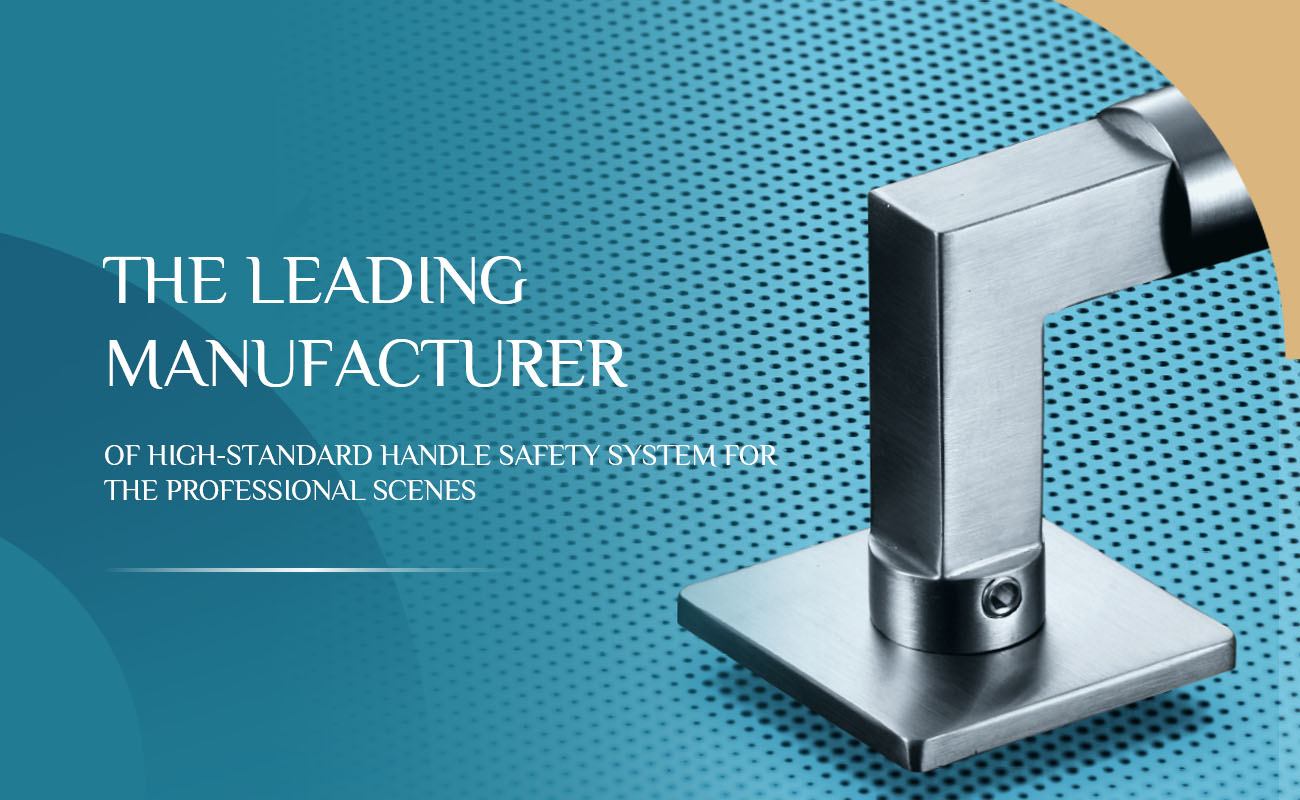
Starting an OEM door hardware project requires more than sending a drawing and requesting a price. Material grade, door structure, performance standards, surface finish, order volume, packaging, and target-market requirements should be clarified before sampling. The earlier these details are confirmed, the easier it is to control cost, quality, and mass-production consistency.
Manufacturer vs Trader: Know Who Controls Production
For customized door hardware, direct manufacturing capability matters because design changes often affect welding, machining, polishing, assembly, testing, and packaging.
HANGFAT was established in Jiangmen in 1994 and integrates product development and manufacturing. Our production lines support a monthly capacity of approximately 800,000 pairs or sets, according to HANGFAT factory information. This capacity provides a stronger foundation for OEM development and subsequent bulk supply.
A trader may coordinate an order, while a manufacturer can directly evaluate whether a requested structure is practical for stable mass production.
Define The OEM Or ODM Requirements First
Before development starts, a useful project sourcing checklist should include:
Product drawings or reference samples
Material grade
Handle dimensions and fixing structure
Door thickness and Lock compatibility
Surface finish and color
Required test standards
Estimated annual and batch quantity
Packaging requirements
Destination market
For an OEM project, the customer normally provides the main design specifications. An ODM project may require more support with structure, materials, production feasibility, and performance optimization.
Understand The Manufacturing Process
A typical customized Stainless Steel Door Handle may pass through material preparation, forming or machining, welding, polishing, surface treatment, assembly, inspection, and packaging.
HANGFAT uses manufacturing equipment including 3D automatic welding and automatic polishing systems to improve welding consistency and surface stability. Raw-material inspection is also conducted before production.
This process control becomes especially important when one approved sample must be reproduced across thousands of units.
Confirm Materials And Performance Standards
SUS304 and SUS316 are commonly available materials within HANGFAT's stainless steel door hardware range. Buyers should select material according to application, exposure conditions, expected service life, and project specification rather than price alone.
For example, this Stainless Steel U Form EN Standard Lever Handle is available in SUS304 or SUS316 and can meet Grade 3 or Grade 4 category-of-use requirements under BS EN 1906.
HANGFAT also manufactures products capable of reaching 200,000 durability cycles, 2500 N pull testing, and up to 480 hours of corrosion testing, depending on the product structure and specified performance level.
Build Quality Checkpoints Into The Project
Quality should not be inspected only after production is complete. Important checkpoints include:
| Stage | Key Check |
|---|
| Incoming material | Grade and specification |
| Production | Dimensions and welding |
| Finishing | Color and surface consistency |
| Assembly | Fit and operation |
| Testing | Load, cycle and corrosion performance |
| Final inspection | Appearance, quantity and packaging |
For large custom door hardware orders, defining these checkpoints before production helps reduce variation between the approved sample and bulk goods.
Requirements vary by market and application. European projects may specify standards such as EN 1906 for lever handles and door furniture and EN 1670 for corrosion resistance.
Some HANGFAT lever handle configurations can reach EN 1906 Category of Use Grade 3 or Grade 4 and EN 1670 corrosion resistance up to Grade 5.
The required standard, test level, door application, and documentation should therefore be confirmed during quotation and sampling, not after the bulk order has been manufactured.
A well-planned OEM door hardware manufacturing project begins with clear specifications and ends with repeatable production. Working directly with an experienced manufacturer gives buyers greater control over design feasibility, material selection, quality checkpoints, compliance, and delivery planning from prototype to bulk production.