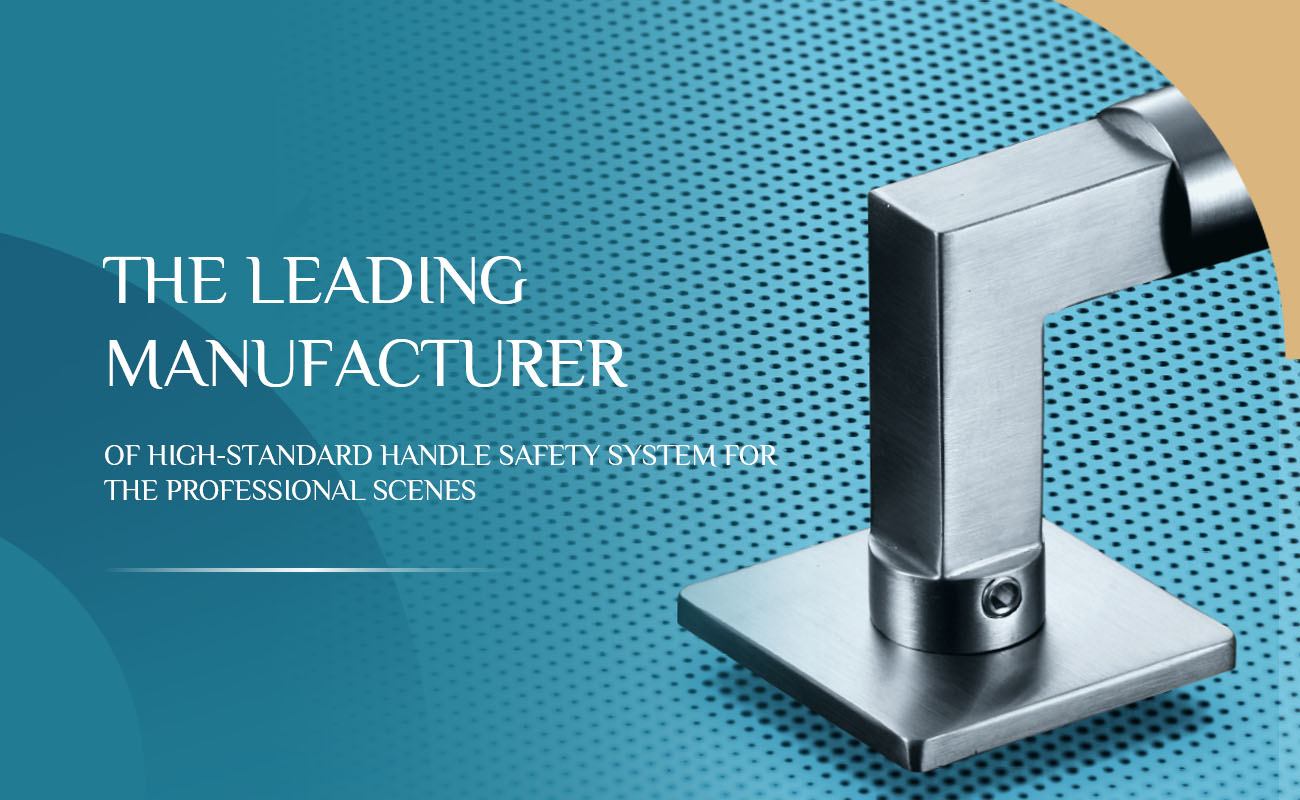
Material selection has a direct impact on door handle durability because it affects corrosion resistance, structural strength, welding quality, surface stability, and long-term performance. For custom architectural hardware, the right material should be chosen according to environment, traffic level, manufacturing process, and required testing standards.
Material Grade Influences Corrosion Resistance
For Stainless Steel Door Handles, SUS304 and SUS316 are two common choices.
SUS304 is widely used for indoor and general architectural applications because it offers good corrosion resistance and manufacturability. SUS316 contains molybdenum, which improves resistance to localized corrosion in chloride-rich environments. According to Outokumpu, common Cr-Ni-Mo austenitic stainless steels typically contain around 2 to 3 percent molybdenum, which is one reason 316 performs better in demanding environments.
HANGFAT offers selected lever handles in both SUS304 and SUS316, allowing material choice to match actual project conditions.
Durability Is More Than Material Strength
A stronger material alone does not guarantee a durable handle. The final performance also depends on wall thickness, fixing structure, spindle system, spring components, welding quality, and surface treatment.
For example, HANGFAT's Stainless Steel U Form EN Standard Lever Handle can be configured to reach 200,000 operating cycles under EN 1906 and corrosion resistance up to 480 hours under applicable EN 1670 requirements.
These values provide a more useful durability reference than material grade alone.
Manufacturing Process Affects Final Performance
Material must suit the complete door handle manufacturing process.
Typical stages include:
Raw material inspection
Forming or machining
Welding
Polishing
Surface treatment
Assembly
Functional testing
HANGFAT uses production methods including laser welding, 3D automatic welding, and automatic polishing on applicable products. These processes help control welding consistency and surface quality during repeated production.
For OEM and ODM projects, material should be confirmed before tooling and sampling because changes in grade can affect welding parameters, polishing results, cost, and testing.
Surface Treatment Also Protects Durability
The same base material can perform differently depending on surface treatment and installation environment.
Satin stainless steel, polished stainless steel, PVD finishes, electrophoresis, and powder coating all have different production and maintenance characteristics.
For bulk supply, buyers should confirm both the base material and the required finish. Treating them as separate decisions can lead to inconsistent appearance or unexpected corrosion performance.
Match Material To The Usage Level
A practical project sourcing checklist should consider:
| Project Factor | Material Decision |
|---|
| Indoor use | SUS304 often suitable |
| Coastal exposure | SUS316 may be preferred |
| High traffic | Stronger complete structure required |
| Exterior use | Higher corrosion requirement |
| Commercial projects | Durability testing should be specified |
| Export market | Applicable standards must be confirmed |
EN 1906 uses durability testing to classify lever handles and door furniture. Grade 6 corresponds to 100,000 test cycles, while Grade 7 corresponds to 200,000 cycles. This shows why material choice should be evaluated together with complete product performance.
Manufacturer vs Trader Matters In Material Decisions
A direct door hardware manufacturer can evaluate how a material affects cutting, machining, welding, polishing, assembly, testing, and cost.
HANGFAT has manufactured architectural hardware since 1994, provides OEM and ODM support, and states a monthly production capacity of approximately 800,000 pairs or sets. This allows material selection to be evaluated from both the prototype and bulk-production perspective.
Build Material Checks Into Quality Control
Important quality control checkpoints should include material verification, wall thickness, welding quality, dimensions, surface consistency, corrosion testing, and durability testing.
For export projects, EN 1906 and EN 1670 requirements should be confirmed before the final material specification is approved.
Material selection ultimately affects far more than the first appearance of a door handle. The correct combination of stainless steel grade, structure, manufacturing process, finish, and testing helps create hardware that remains stable through repeated use and changing environmental conditions. HANGFAT combines material options, direct manufacturing control, measurable testing, and scalable production to support this process from custom development through bulk supply.