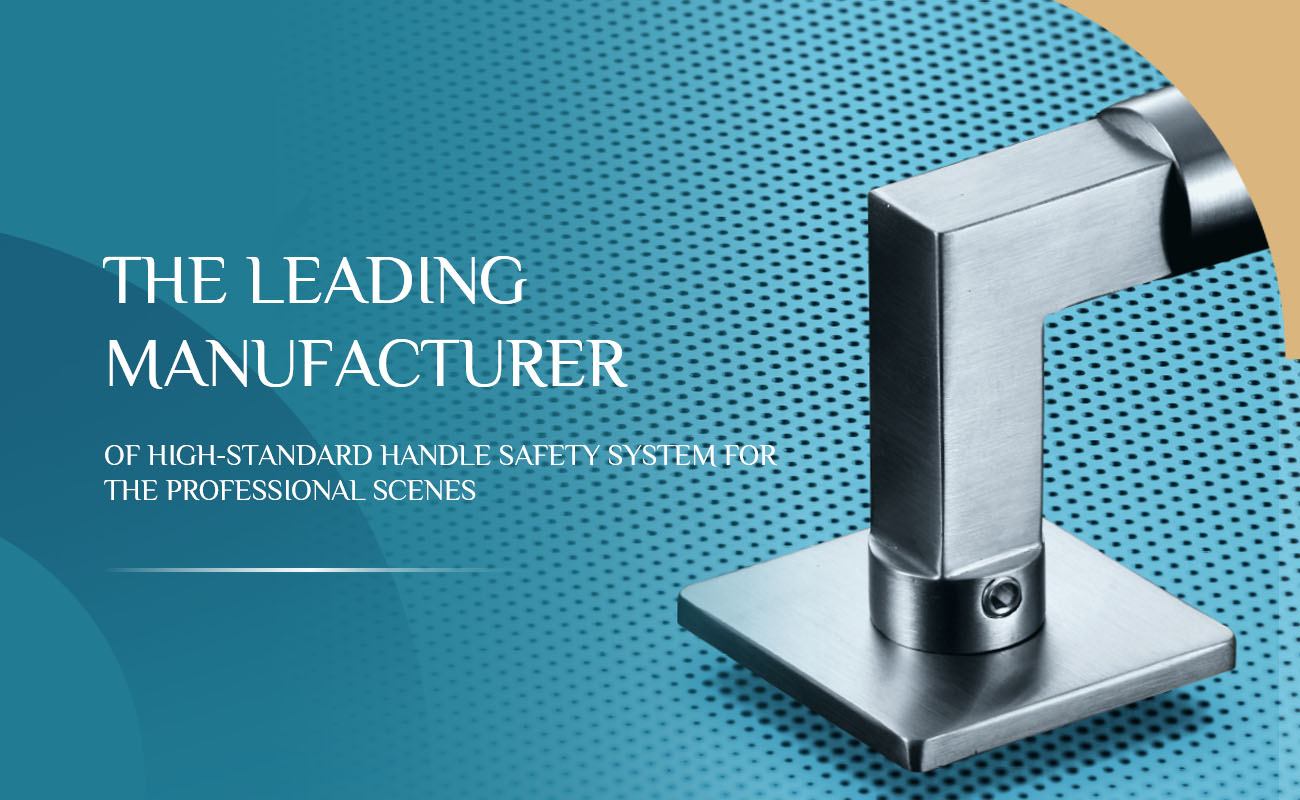
Installing a storm door handle is not just a simple fitting step. The final result affects opening comfort, Latch stability, weather resistance, and long-term maintenance cost. For projects that involve repeated installations, the real challenge is not only how to install a storm door handle, but how to make sure every set fits the same way across different batches. HANGFAT describes itself as a lever handle manufacturer, offers OEM and ODM service, and says its monthly production capacity reaches 800,000 pairs or sets. Its product range includes stainless steel handles, turn knobs, back plates, Locksets, and Hinges.
Start With Door Structure And Fit
Before installation begins, the first job is to confirm the door profile, fixing hole position, latch type, and required handle construction. Storm doors are lighter than many solid entry doors, but they face more exposure to moisture, temperature change, and repeated pull force. That means the handle must match not only the hole spacing, but also the door material and the environment. HANGFAT’s stainless steel Pull Handle range is positioned for slim profile doors, timber doors, multi wood metal doors, and glass doors, which shows that handle selection should start from door structure rather than surface style alone.
Basic Steps To Install A Storm Door Handle
The installation process usually starts with checking the drilling template and aligning the exterior handle with the door preparation. Then the spindle or fixing connector is passed through the door, the inside handle or trim is matched to the exterior side, and the fixing screws are tightened evenly. After that, the latch action should be tested several times to confirm smooth return and proper engagement. In practical use, many installation failures come from inaccurate alignment or uneven screw pressure, not from the visible handle itself. ANSI and BHMA grade guidance shows why installation precision matters in the long run, because Grade 1 is the highest product grade level and is linked to very demanding operational and durability testing.
Why Handle Grade Matters In Exterior Use
Storm doors are opened frequently and often sit in humid or semi-outdoor conditions, so hardware grade matters more than many buyers expect. According to ANSI and BHMA references, Grade 1 is the highest grade level, and certified cycle performance can reach 800,000 cycles for cylindrical bored locks and 1,000,000 cycles for mortise locks, depending on the product category. Under EN 1906, Grade 6 is rated at 100,000 cycles and Grade 7 at 200,000 cycles for lever handle and knob furniture. These benchmarks help buyers judge whether a handle is suited for light residential use or more demanding traffic.
Manufacturer Vs Trader Makes A Real Difference
This is where manufacturer vs trader becomes important. A trader may provide a wide range of styles, but a manufacturer controls the details that affect installation quality, including machining tolerance, spindle dimensions, surface treatment, and final assembly. HANGFAT states that it combines product development, manufacturing, and independent marketing in one system. For bulk supply considerations, that control improves repeatability, reduces fitting problems on site, and helps keep the same specification across repeat orders.
OEM And ODM Process Before Mass Production
For storm door programs, the OEM and ODM process should begin before sample approval is finalized. In OEM projects, the factory follows the buyer’s drawings, finish targets, and installation dimensions. In ODM projects, the manufacturer can optimize the fixing structure, simplify installation, and improve corrosion protection according to the application. HANGFAT explicitly states that it provides OEM and ODM service. This is valuable for project sourcing checklist planning, because door thickness, hole spacing, spindle structure, finish requirement, and latch compatibility should all be confirmed before mass production starts.
Manufacturing Process Overview
A stable installation result starts with stable production. In practical architectural hardware manufacturing, the process usually includes raw material selection, forming or casting, precision machining, surface finishing, assembly, and final inspection. HANGFAT’s solid casting lever handle page emphasizes proven technology, operational reliability, and a 2500N pull test, while also stating that the set is suitable for fire rated doors. This kind of manufacturing process overview matters because a storm door handle must keep its structure and finish after repeated use, not just look correct on the first day.
Quality Control Checkpoints
Quality control checkpoints should focus on the parts that decide long-term performance. These include dimensional inspection, spindle fit, screw engagement, pull resistance, finish consistency, and corrosion testing. HANGFAT’s product information mentions EN 1670 grade 5 corrosion resistance on one stainless steel lever handle page, alongside the 2500N pull test. For exterior or semi-exterior applications, these details are practical, because poor corrosion performance can quickly turn into looseness, rough movement, or visible finish failure.
Material Standards Used And Export Market Compliance
Material standards used in storm door handles directly affect corrosion resistance and service life. HANGFAT’s pull handle page highlights SUS304 stainless steel, which is widely selected for hardware that needs better resistance to moisture and outdoor exposure. On the compliance side, North American projects often refer to ANSI and BHMA expectations, while European projects commonly use EN 1906 for durability classification. Matching the handle material, performance level, and installation structure to the target market is a key part of export market compliance.
Quick Project Sourcing Checklist
Item | What to confirm
Door type | Slim profile, timber, metal, or glass structure
Material | SUS304 or other required corrosion resistant grade
Fixing method | Spindle, through-bolt, or matched connector system
Durability | Grade target based on real traffic level
OEM or ODM | Custom drawing production or structure optimization
Quality control | Pull test, corrosion test, dimensional inspection
Supply stability | Same specification across all batches
Compliance | ANSI and BHMA or EN standard alignment
This checklist helps reduce site rework and supports more stable installation results across larger orders. For long-term supply, a good storm door handle program depends on consistent engineering and manufacturing control, not only on a correct installation manual. HANGFAT’s positioning as a direct manufacturer supports that approach.
Conclusion
The best answer to how to install a storm door handle is more than a short sequence of screws and fittings. Successful installation depends on correct door matching, reliable materials, tested durability, stable OEM and ODM execution, and strong quality control checkpoints. HANGFAT’s manufacturing model, stated capacity, and stainless steel hardware range make it better suited for projects that value repeatability, export readiness, and long-term exterior performance.