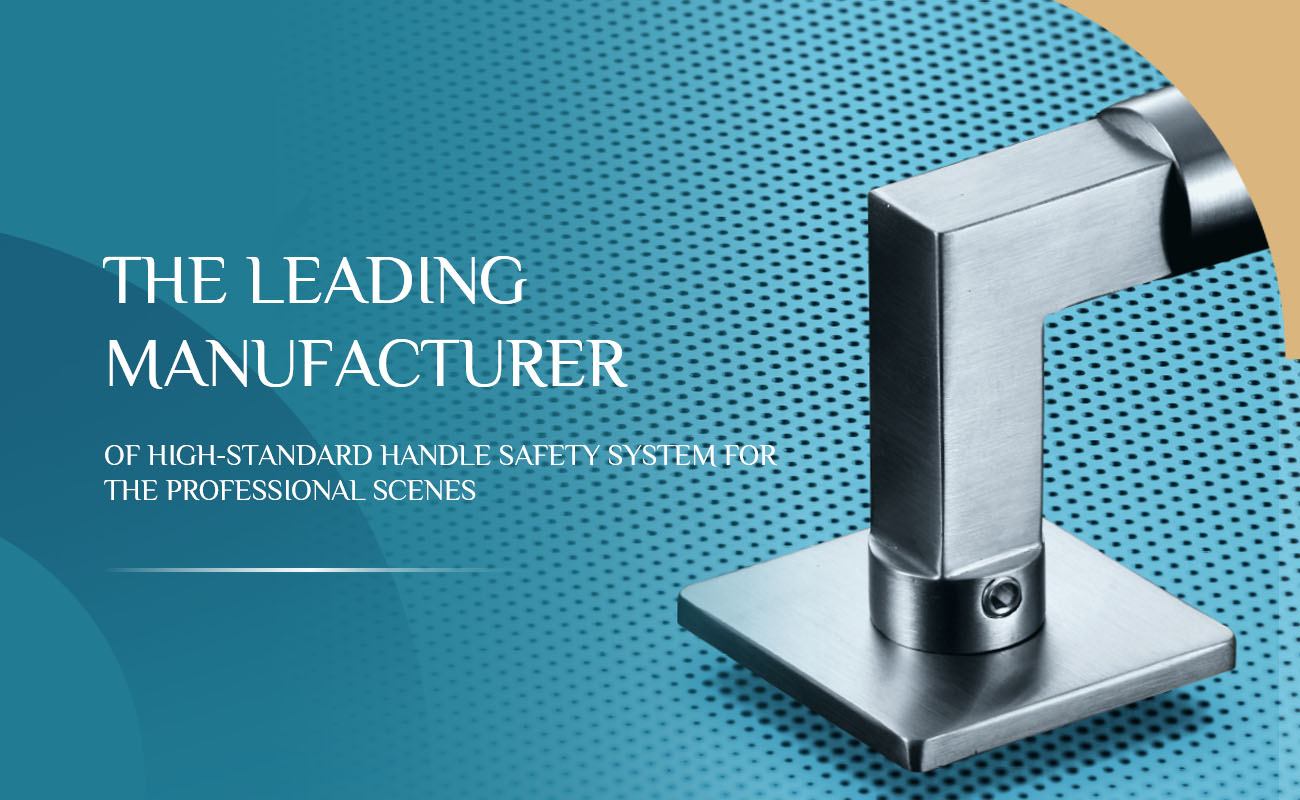
Installing a storm door handle is not only a fitting job. It directly affects daily opening comfort, Latch stability, weather resistance, and long-term service life. In exterior-facing applications, even a small alignment error can lead to rough operation, loose fixing points, or early finish wear. HANGFAT positions itself as a direct architectural hardware manufacturer with OEM and ODM service, integrated product development and manufacturing, and a stated monthly capacity of 800,000 pairs or sets. Its product line covers stainless steel handles, turnknobs, back plates, Locksets, and Hinges, which gives project buyers a wider matching base for door hardware programs.
Start With Door Structure And Installation Data
Before installing a storm door handle, the first step is to confirm the door profile, panel thickness, hole spacing, latch type, and fixing method. In practical sourcing, this is where many field problems begin. If the handle geometry does not match the door preparation, installers often need on-site adjustment, which increases labor cost and damages consistency across a project. HANGFAT’s own installation guidance for door handles highlights the importance of material standards, lock compatibility, and standardized dimensions before bulk installation begins.
Basic Steps To Install Storm Door Handle
A sound installation process usually follows five steps. First, check the drilling template and confirm that the latch opening and fixing points align with the selected handle set. Second, insert and secure the latch body so that the latch tongue faces the correct direction. Third, position the exterior handle and guide the spindle or connector through the latch mechanism. Fourth, align the interior trim or inside handle and tighten the fixing screws evenly. Fifth, test the handle several times to make sure the return action is smooth and the latch engages without drag. This sequence looks simple, but in real use it depends heavily on machining accuracy and stable component fit. ANSI/BHMA guidance notes that Grade 1 locks must pass one million cycles of opening and closing with a 10 pound axial load applied, which shows how strongly long-term performance depends on correct structure and installation.
Why Manufacturer Vs Trader Matters
The difference between a manufacturer and a trader becomes obvious when the same storm door handle must be installed across many units. A manufacturer controls raw material selection, machining tolerance, assembly, and final inspection in one chain. A trader may offer more styles, but often cannot control spindle fit, finish thickness, and mounting precision with the same consistency. HANGFAT’s company and quality pages emphasize direct manufacturing, OEM and ODM support, and large-scale output, which are practical strengths when bulk supply considerations and repeatability matter more than a single sample appearance.
OEM And ODM Process Before Production
For storm door projects, the OEM and ODM process should start before sample approval is finalized. In OEM work, the factory follows the buyer’s drawings, finish target, and installation dimensions. In ODM work, the manufacturer can optimize the fixing structure, connector method, corrosion protection, and installation logic according to the intended market. HANGFAT publicly states that it supports both OEM and ODM, and its own installation article links large monthly throughput with better lead time control and standardized compatibility for bigger projects. That is useful in a project sourcing checklist because door thickness, finish, latch match, and packaging should all be confirmed before mass production begins.
Manufacturing Process Overview
A reliable storm door handle begins with stable production. The general manufacturing flow includes raw material selection, forming or casting, precision machining, surface treatment, assembly, and final testing. For semi-outdoor and exterior applications, material standards used are especially important. HANGFAT’s published guidance recommends durable materials such as SUS304 stainless steel or zinc alloy die-casting and notes that corrosion resistance should be validated through salt spray testing. This matters because a storm door handle faces moisture, temperature change, and repeated pull force more often than many interior handles.
Quality Control Checkpoints And Export Market Compliance
Quality control checkpoints should cover spindle fit, screw engagement, latch alignment, surface finish, and corrosion resistance before shipment. Buyers should also match the product to the target market standard. In North America, ANSI/BHMA references are widely used for durability expectations. In Europe, EN 1906 identifies Grade 6 at 100,000 cycles and Grade 7 at 200,000 cycles for lever handle and knob furniture. These standards help buyers judge whether a handle is suitable for light residential exposure or heavier repeated use. For export market compliance, checking durability grade, finish performance, and installation compatibility together is far more useful than reviewing style alone.
Quick Project Sourcing Checklist
Item | What to confirm
Door structure | Slim profile, timber, metal, or mixed material
Fixing method | Spindle, through-bolt, or matched connector system
Material | SUS304 stainless steel or other specified grade
Durability | Traffic level and required testing grade
OEM or ODM | Standard production or structural optimization
Quality control | Alignment, torque, finish, and corrosion checks
Supply stability | Same specification across repeat batches
Compliance | ANSI/BHMA or EN requirement by destination market
This checklist is useful because successful installation depends on more than a screwdriver and template. It depends on whether the handle system was engineered and manufactured for repeatable field performance. HANGFAT’s direct manufacturing model, OEM and ODM capability, and stated production scale make that easier to manage in long-term supply programs.
Conclusion
The best answer to How To Install Storm Door Handle hardware is not only a short fitting sequence. Correct installation depends on door matching, stable materials, sound manufacturing process overview, strict quality control checkpoints, and clear export market compliance planning. HANGFAT’s positioning as a direct manufacturer gives it an advantage in these areas, especially where bulk orders, installation efficiency, and long-term consistency all matter.