Problem Explanation
Coastal buildings present one of the most challenging environments for door hardware. High humidity, salt-laden air, temperature fluctuations, and frequent cleaning exposure all accelerate corrosion and material degradation. In hotels, resorts, residential complexes, and public facilities near the sea, standard commercial door hardware may show rust, pitting, discoloration, and mechanical failure much earlier than expected.
The primary cause of this issue is chloride exposure. Salt particles carried by sea air can penetrate the protective oxide layer on stainless steel surfaces. Once this passive layer is damaged, localized corrosion begins. Material studies show that stainless steel without proper alloy composition or surface finishing may develop visible corrosion within months in coastal conditions. In addition, poor polishing or rough surfaces can trap moisture and salt, further accelerating corrosion.
Another critical issue is sourcing inconsistency. When door hardware is supplied through traders, different batches may come from different factories, leading to variations in material grade, surface finish, coating thickness, and corrosion resistance. For large projects, these inconsistencies can result in uneven aging, mismatched appearance, and increased maintenance cost.
Solutions
Selecting suitable door hardware for coastal buildings requires a combination of proper material standards, controlled manufacturing processes, and strict quality control checkpoints. A direct door hardware manufacturer is better positioned to control these factors compared to trader-based sourcing.
Material selection is the first priority. SUS316 stainless steel door hardware is widely recommended for coastal applications because it contains molybdenum, which improves resistance to chloride corrosion. Compared to SUS304, SUS316 can provide significantly higher corrosion resistance in salt-rich environments. For indoor coastal applications with lower exposure, SUS304 may still be used, but surface finishing must be carefully controlled.
The manufacturing process also plays a key role. A complete process includes raw material inspection, cutting, forming, CNC machining, polishing, surface treatment, assembly, and final testing. Polishing quality directly affects corrosion resistance, as smoother surfaces reduce salt accumulation. Surface finishing methods such as brushed, satin, or PVD coating can improve both durability and appearance when applied correctly.
Quality control checkpoints should include material composition verification, dimensional inspection, surface roughness measurement, coating adhesion testing, and salt spray testing. Salt spray testing is a widely accepted method to simulate coastal conditions. High-quality stainless steel door hardware can reach more than 240 hours under standard salt spray testing, indicating strong resistance to corrosion.
HANGFAT supports OEM and ODM customization for coastal building projects. Material grade, thickness, finish, structure, and packaging can be tailored according to project requirements. This ensures that the final product meets environmental demands and export market compliance standards.
How To Choose The Right Product
Choosing door hardware for coastal buildings requires a structured project sourcing checklist. Key factors include environment exposure level, distance from the sea, humidity, cleaning frequency, door traffic, material grade, finish type, and expected service life.
Material Grade | Suitable Environment | Key Advantage
SUS304 stainless steel | Indoor coastal areas with limited exposure | Balanced corrosion resistance and cost efficiency
SUS316 stainless steel | Outdoor or high exposure coastal environments | Superior resistance to chloride corrosion
PVD finish stainless steel | Premium interior applications | Improved surface durability and color consistency
Low-grade materials | Low-cost short-term projects | Higher risk of corrosion and failure
For coastal applications, Stainless Steel Door Handles, stainless steel Hinges, and Locksets should use appropriate material grades and controlled finishing processes. Brushed and satin finishes are often preferred for commercial door hardware because they reduce visible wear and maintain a stable appearance. PVD finish door hardware can be used in premium projects where both durability and aesthetics are important.
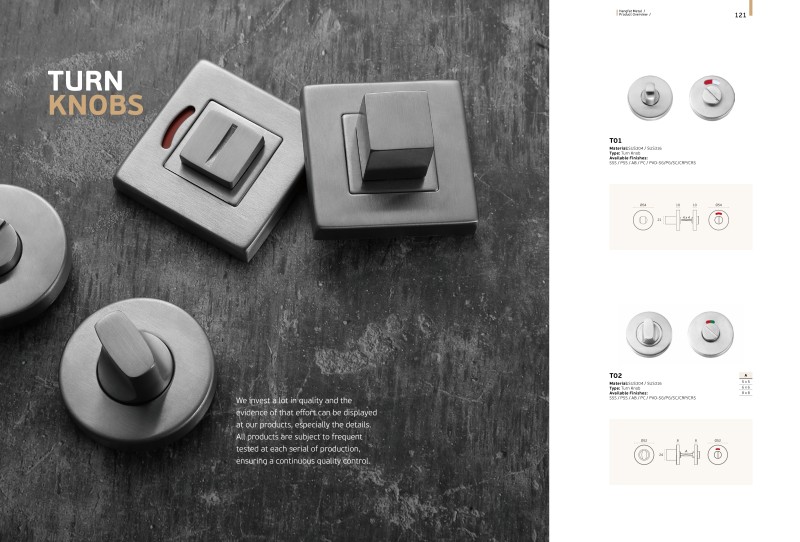
Bulk door hardware supply is another important consideration. Large projects require consistent material, finish, and dimensions across all units. Working directly with an architectural hardware supplier like HANGFAT ensures stable production, strict quality control, and consistent performance across large orders. HANGFAT provides Stainless Steel Door Handles, hinges, locksets, back plates, turn knobs, and bathroom accessories for complete commercial door hardware solutions.
Conclusion And Guidance
Door hardware used in coastal buildings must withstand salt exposure, humidity, and frequent use. Selecting the wrong material or using inconsistent products can lead to early corrosion, increased maintenance, and reduced project quality.
A direct manufacturer with strong material control, integrated manufacturing, OEM and ODM capability, and quality inspection systems can provide more reliable corrosion resistant door hardware than trader-based sourcing. HANGFAT combines stainless steel expertise, precision manufacturing, and scalable production to deliver stable solutions for coastal applications.
Sharing project details such as environment exposure, material requirements, finish preference, order quantity, and compliance standards helps ensure the selected door hardware performs reliably over time.