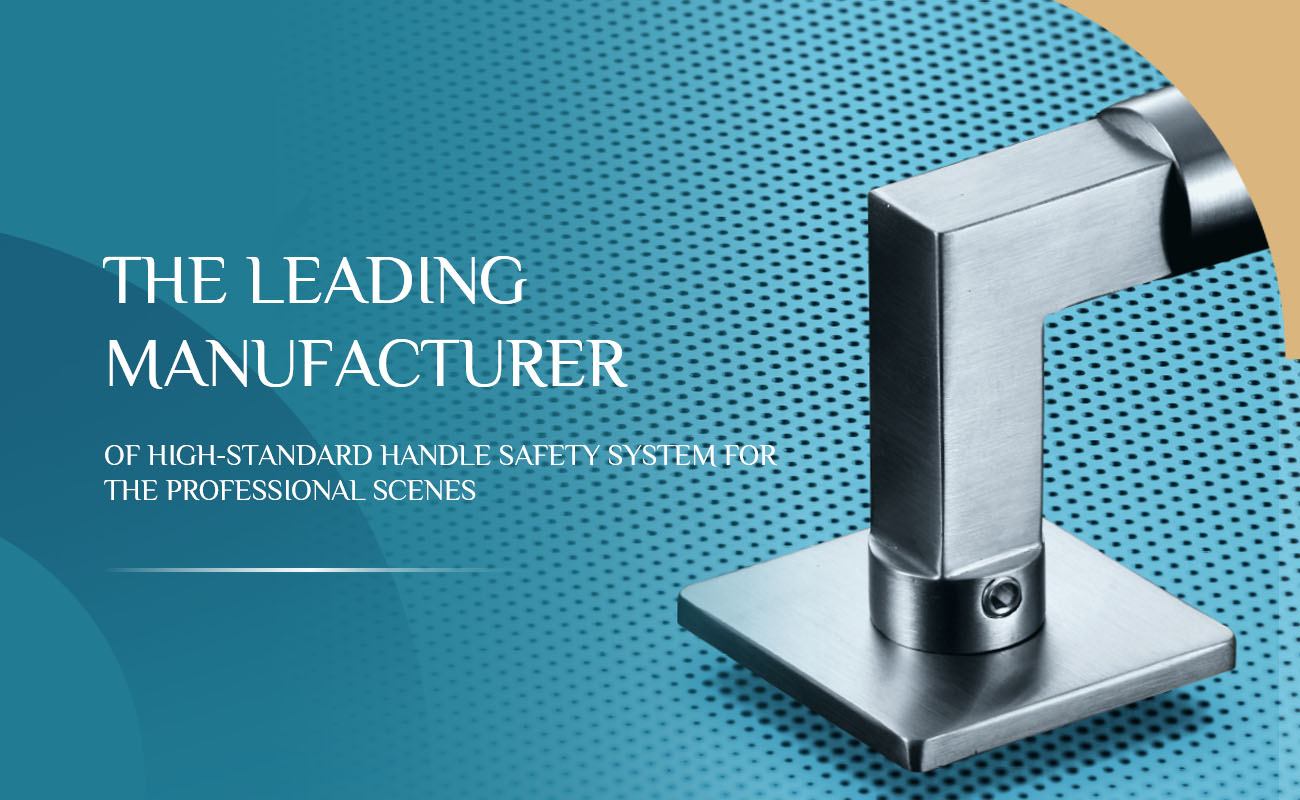
3D modeling for custom hardware development helps manufacturers identify structural, dimensional, assembly, and production issues before physical samples are made. For door hardware projects, this can reduce repeated revisions, clarify OEM requirements, and improve the transition from concept to bulk production.
Turn Ideas Into Manufacturable Designs
A sketch can show appearance, but a 3D model provides more useful information about dimensions, wall thickness, bend radius, fixing positions, spindle alignment, and internal structure.
Before sampling, manufacturers can use the digital model to evaluate whether the product can be machined, welded, polished, assembled, and installed efficiently. This is especially valuable for custom lever handles where small dimensional changes may affect the complete door system.
HANGFAT integrates product development and manufacturing in-house, rather than operating only as a trader. This allows design decisions to be reviewed against actual factory processes.
Improve The OEM And ODM Process
For an OEM project, 3D modeling can convert customer drawings into production-ready specifications. For ODM development, it also helps compare different structures before tooling begins.
A useful project sourcing checklist should combine the 3D model with:
Material grade
Door thickness
Spindle size
Lock compatibility
Surface finish
Performance requirements
Order quantity
Destination market
This reduces misunderstandings between purchasing, engineering, and production teams.
Check Compatibility Before Making Samples
Dimensional compatibility is critical in custom door hardware manufacturing.
HANGFAT's Stainless Steel U Form EN Standard Lever Handle supports spindle sizes from 7 mm to 9 mm, several fitting configurations, and door thicknesses from 38 mm to 75 mm.
A 3D model can help verify these interfaces before a prototype is manufactured, reducing the risk of discovering fitting problems after tooling or sampling.
Connect Design With Manufacturing Processes
door hardware production may involve forming, machining, welding, polishing, finishing, assembly, and inspection.
HANGFAT uses 3D automatic welding and automatic polishing equipment to improve welding consistency and surface quality. The company states that these systems help create more uniform solder joints and smoother finishes.
For mass production, this means the digital design should consider not only appearance but also welding access, polishing areas, component positioning, and assembly sequence.
Build Quality Requirements Into The Design
3D modeling also helps define important quality control checkpoints before production.
| Design Area | What To Check |
|---|
| Dimensions | Assembly tolerance |
| Material | SUS304 or SUS316 |
| Welding | Joint position |
| Fitting | Spindle and lock match |
| Surface | Polishing accessibility |
| Structure | Durability and strength |
Selected HANGFAT lever handles can reach 200,000 durability cycles, EN 1906 Grade 3 or Grade 4, and corrosion resistance up to 480 hours under EN 1670 Grade 5.
These requirements can be considered during design instead of being treated only as final inspection criteria.
Make Bulk Supply More Predictable
One approved sample does not guarantee stable mass production. The design must also be easy to reproduce across large quantities.
HANGFAT states that its production capacity reaches approximately 800,000 pairs or sets per month, supported by OEM and ODM services and multiple production lines.
For bulk supply, finalized 3D data can help standardize tooling, fixtures, inspection points, and assembly requirements across repeated production batches.
Export standards may influence structure, material, corrosion resistance, and testing. HANGFAT presents certifications and test documentation including EN 1906, EN 1670, ISO 9001, ISO 14001, CE, and RoHS.
Using 3D modeling early in development allows these requirements to be considered before tooling and mass production are finalized.
3D modeling improves custom hardware development efficiency because it connects concept design with real manufacturing conditions. For HANGFAT, combining digital design review with direct manufacturing, automated welding and polishing, OEM and ODM support, and scalable production helps reduce revision risk and create a more efficient path from initial concept to repeatable mass production.