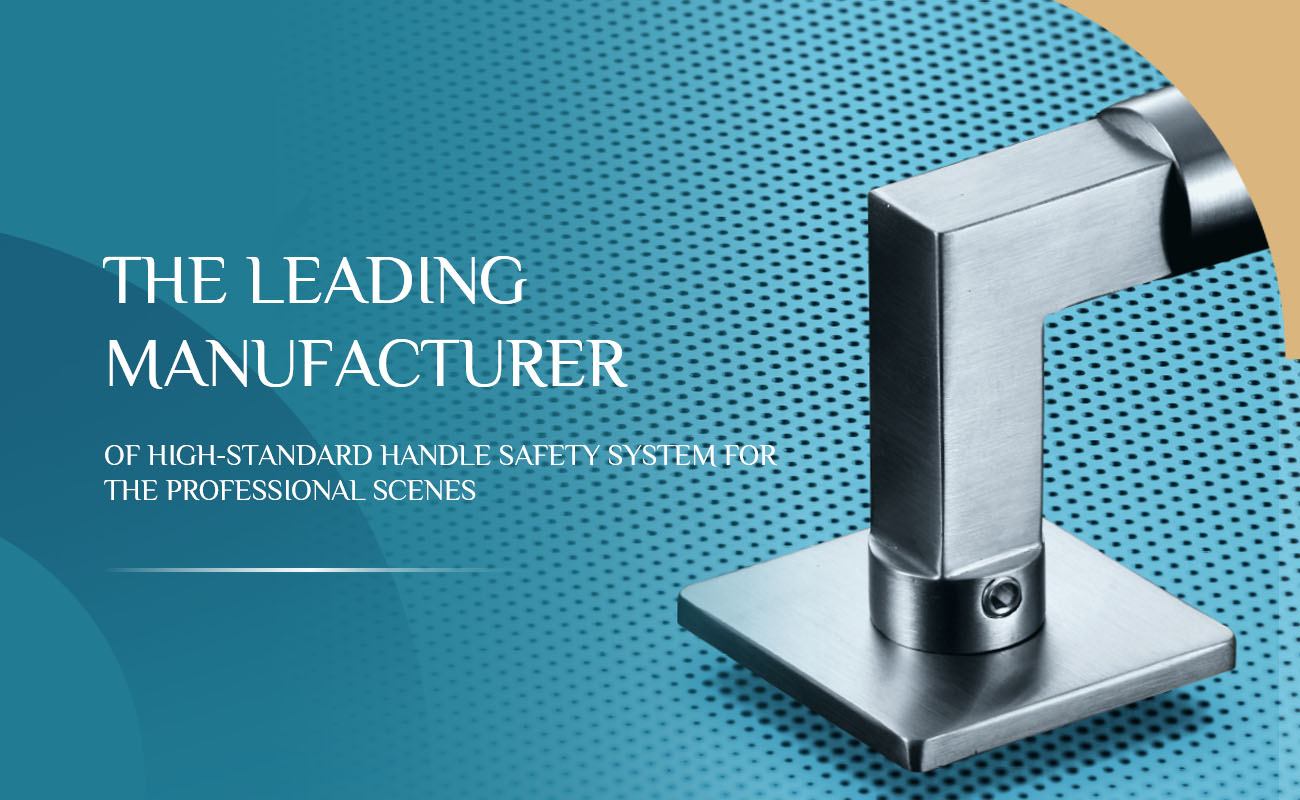
Design challenges in custom metal products usually appear when appearance, structure, manufacturing feasibility, cost, and performance do not fully match. For architectural hardware, manufacturers solve these problems by reviewing the design early, selecting suitable materials, adjusting production methods, testing prototypes, and controlling critical dimensions before mass production.
Turn Design Problems Into Manufacturing Questions
A custom drawing may contain details that are difficult to form, weld, polish, or assemble consistently.
Before sampling, a manufacturer should review:
Wall thickness
Bend radius
Welding position
Machining tolerance
Fixing structure
Surface accessibility
Component compatibility
Required performance
This is where the difference between a manufacturer vs trader becomes important. A direct manufacturer can evaluate the design with engineering and production teams and make adjustments based on actual factory conditions.
HANGFAT integrates product development and manufacturing and has been producing architectural hardware since 1994. Its factory also uses 3D automatic welding and automatic polishing equipment to improve production consistency.
Solve Material And Structural Conflicts Early
Material selection can influence corrosion resistance, strength, welding, polishing, and cost.
Selected HANGFAT products are available in SUS304 and SUS316 stainless steel. Its stainless steel crank lever handle range uses these material options for different application and performance requirements.
For projects exposed to more demanding environments, material and surface treatment should be reviewed together rather than separately.
Adjust The Design Around The Manufacturing Process
A professional custom metal hardware manufacturing process may include forming, CNC machining, laser welding, polishing, surface treatment, assembly, and inspection.
HANGFAT uses laser welding on selected products and automatic welding and polishing equipment within its production system.
A narrow welding area, sharp corner, or deep recessed surface may look acceptable in a rendering but create instability during repetitive production. Manufacturers may therefore adjust the radius, joint location, component structure, or polishing path while keeping the original design intent.
Use Prototypes To Verify Solutions
OEM and ODM development should not move directly from drawings to bulk production.
A prototype should verify:
| Design Challenge | What To Check |
|---|
| Complex shape | Forming feasibility |
| Tight tolerance | Machining accuracy |
| Welded structure | Joint strength |
| Special finish | Surface consistency |
| New fitting | Assembly compatibility |
| High-use application | Durability |
For example, HANGFAT's Stainless Steel U Form EN Standard Lever Handle uses a laser-welded end structure and offers different radius, fitting, and material configurations.
Define Quality Checkpoints Before Bulk Supply
A design solution is only successful when it can be repeated across larger quantities.
Selected HANGFAT products specify performance levels including 200,000 durability cycles, 2500 N security testing, 60 Nm torque testing, 800 N pull testing, and up to 480 hours of salt spray testing depending on the model.
These measurable requirements should become part of the production specification.
Important quality control checkpoints include material verification, critical dimensions, weld strength, surface finish, assembly fit, functional movement, durability, and corrosion resistance.
Use A Project Sourcing Checklist To Reduce Rework
Before final approval, the project should confirm:
This checklist helps identify whether a design problem affects tooling, processing, inspection, or export compliance.
Plan For Export Requirements During Development
Custom metal products should be designed around the standards required in the destination market.
HANGFAT's product range includes lever handles designed around EN 1906 performance requirements and corrosion resistance under EN 1670. Selected products can achieve EN 1670 Grade 5 corrosion performance.
These standards can influence material, structure, fixing strength, and surface treatment, so compliance should be considered before the design is frozen.
HANGFAT states a monthly production capacity of approximately 800,000 pairs or sets and provides OEM and ODM services. For custom projects, this means design optimization is not only about solving a prototype problem. The final solution must also remain practical, testable, and repeatable when production moves to larger volumes.