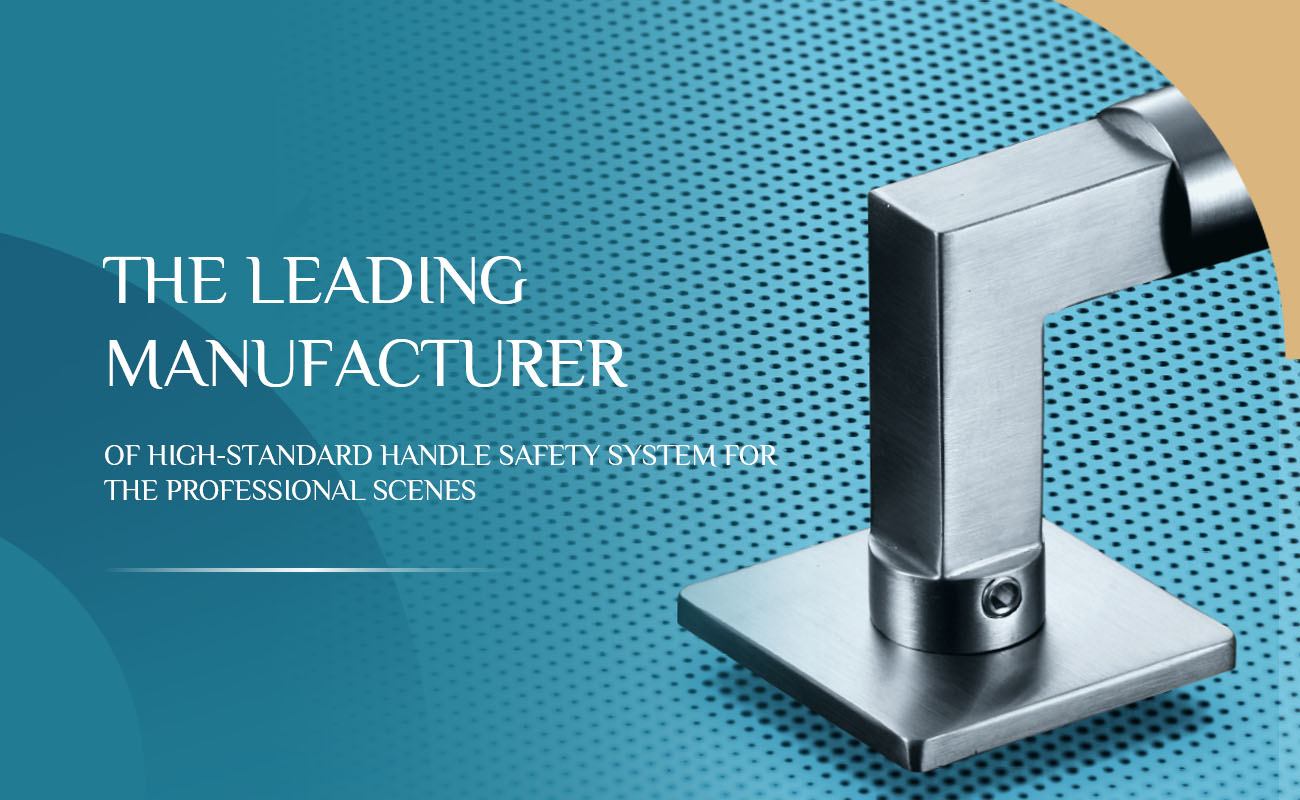
Surface treatment in custom hardware manufacturing affects far more than appearance. For door handles and architectural hardware, the finish can influence corrosion resistance, wear resistance, cleaning, visual consistency, and long-term performance. It should therefore be defined together with the base material, application environment, and required standards.
Surface Finish Must Match The Application
A finish selected for an interior hotel door may not be suitable for an exterior entrance or humid environment.
A practical project sourcing checklist should confirm:
For stainless steel products, satin and polished finishes retain the natural appearance of the material. PVD, electrophoresis, and powder coating provide additional decorative options and different processing characteristics.
Different Surface Treatments Serve Different Purposes
HANGFAT offers selected door hardware in satin stainless steel, polished stainless steel, PVD gold, PVD black, electrophoresis black, and powder-coated finishes.
| Surface Treatment | Main Consideration |
|---|
| Satin stainless steel | Clean architectural appearance |
| Polished stainless steel | Higher reflectivity |
| PVD | Decorative color and wear resistance |
| Electrophoresis | Uniform coated finish |
| Powder coating | Flexible color options |
HANGFAT notes that its PVD process can improve wear resistance while providing black, gold, and rose decorative finishes.
Base Material And Finish Must Be Considered Together
Surface treatment cannot compensate for an unsuitable base material.
Selected HANGFAT products are available in SUS304 and SUS316 stainless steel. SUS316 may be considered for more demanding corrosive environments, while SUS304 is widely used across architectural applications.
For example, HANGFAT's Stainless Steel L Form EN Standard Lever Handle is available in SUS304 or SUS316 and several finish options. Applicable SUS304 satin configurations can reach 480 hours of corrosion testing.
Surface Preparation Affects Final Consistency
A good coating or finish depends heavily on the surface underneath it.
Before final finishing, door hardware may require welding cleanup, grinding, polishing, brushing, and surface inspection. Poor preparation can leave visible weld marks, scratches, inconsistent texture, or uneven coating.
HANGFAT uses automatic polishing equipment to create a smoother and more consistent surface across stainless steel handles and related hardware. Its factory also uses 3D automatic welding equipment to improve weld uniformity before finishing.
This is especially important in bulk supply, where one approved sample must be reproduced across thousands of pieces.
Surface Treatment Should Be Part Of The OEM And ODM Process
For OEM projects, buyers may already specify a required finish. During ODM development, the manufacturer can help evaluate whether the selected finish is practical for the material, geometry, application, and cost target.
A direct custom hardware manufacturer can review polishing access, coating areas, hanging points, color consistency, and masking requirements during design development. This gives direct manufacturing an advantage over a trader when appearance and process stability are both important.
Define Quality Control Checkpoints
Surface quality should be inspected throughout production rather than only during final packing.
Important quality control checkpoints include:
Base-material verification
Pre-polishing inspection
Weld and grinding quality
Surface texture
Color consistency
Coating coverage
Corrosion testing
Scratch protection during packaging
For HANGFAT lever handles, available corrosion-performance levels include EN 1670 Grade 3 at 96 hours, Grade 4 at 240 hours, and Grade 5 at 480 hours depending on the selected product and configuration.
These measurable values provide a clearer basis for project specifications than simply requesting a corrosion-resistant finish.
Consider Mass Production Before Approving A Finish
Some finishes are more sensitive to color variation, polishing direction, surface defects, or processing conditions. A finish that looks acceptable on one prototype may become difficult to reproduce consistently across a large order.
Before bulk hardware supply, the approved sample should define color, gloss level, texture, polishing direction, acceptable variation, and corrosion requirement.
HANGFAT provides OEM and ODM services and states a production capacity of approximately 800,000 pairs or sets per month, making stable surface-control procedures particularly important for larger repeat orders.
Surface treatment may also influence whether the final hardware reaches required corrosion standards.
HANGFAT's lever handle range includes products capable of EN 1906 Grade 3 or Grade 4 performance, 200,000 durability cycles, and EN 1670 corrosion resistance up to Grade 5.
For export projects, finish selection should therefore be discussed alongside material grade, testing requirements, and destination-market compliance before mass production begins.
Surface treatment is not simply the final decorative step in custom door hardware manufacturing. It connects design, material, production, corrosion resistance, quality control, and brand consistency. By combining multiple finish options with automated welding, polishing, OEM and ODM support, and measurable corrosion testing, HANGFAT can help move custom hardware from an approved appearance sample into repeatable bulk production.