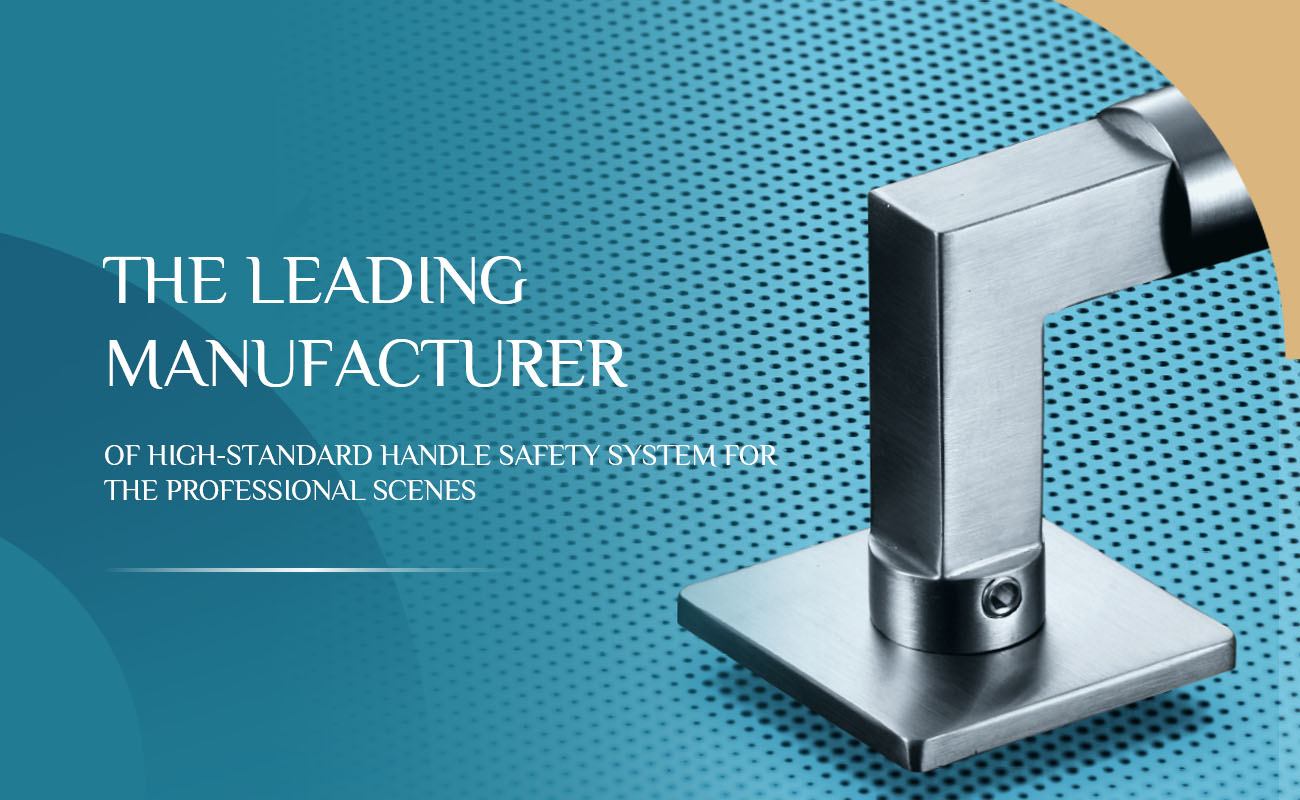
A hardware factory is ready for large volume custom orders when it has stable production capacity, advanced equipment, strong quality control, skilled teams, and reliable supply management systems.
Why Does Factory Capability Matter For Large Custom Hardware Orders?
Factory capability is one of the most important factors when selecting a supplier for large volume custom hardware orders.
Large orders require more than manufacturing space. They require the ability to maintain consistent quality, meet delivery schedules, manage customized requirements, and reproduce the same product standards across thousands of units.
For products such as door hardware, furniture fittings, architectural components, and decorative metal parts, production reliability directly affects project progress and customer satisfaction.
From practical manufacturing experience, a factory’s readiness depends on the combination of production resources, technical knowledge, and process management rather than a single factor.
How Does Production Capacity Support Large Hardware Orders?
Production capacity determines whether a factory can handle high-volume manufacturing without affecting quality.
A capable hardware factory should have:
Sufficient production equipment
Organized manufacturing processes
Experienced production teams
Effective scheduling systems
Stable raw material supply
Large volume orders require factories to balance speed and quality. Increasing output without proper management may lead to inconsistent products or delayed deliveries.
A mature production system allows factories to maintain stable performance even when order quantities increase.
Why Is Manufacturing Equipment Important For Bulk Production?
Advanced manufacturing equipment improves efficiency, precision, and repeatability.
Common equipment used in custom hardware production includes:
These machines help achieve:
Accurate dimensions
Consistent product structures
Stable processing results
Higher production efficiency
For large volume orders, equipment capability directly affects whether a factory can maintain the same quality throughout the entire production cycle.
How Does A Factory Manage Custom Product Development?
Large custom orders often begin with product development rather than immediate production.
A capable factory should provide support for:
Design review
Engineering evaluation
Prototype development
Process optimization
Production preparation
Experienced engineering teams can identify potential manufacturing challenges before mass production begins.
This reduces development risks and helps ensure that customized products can be produced efficiently at large volumes.
How Does quality control Support Large Order Production?
Quality control is essential for maintaining consistency in large volume manufacturing.
A reliable hardware factory should have quality procedures covering:
| Quality Control Stage | Purpose |
|---|
| Material Inspection | Verify raw material stability |
| Process Inspection | Monitor production conditions |
| Dimensional Testing | Ensure product accuracy |
| Surface Inspection | Control finish quality |
| Final Inspection | Confirm shipment standards |
Continuous quality control prevents small problems from becoming large-scale production issues.
Why Are Surface Treatment Capabilities Important?
Surface finishing often determines the final appearance and durability of hardware products.
Large projects may require thousands of components with identical finishes, including:
Brushed metal
Polished surfaces
PVD coating
Electroplating
Powder coating
A capable factory should have strong surface treatment control to maintain:
Color consistency
Texture uniformity
Coating durability
Appearance stability
Consistent finishing is especially important for architectural and decorative hardware where all components must match after installation.
How Does Supply Chain Management Affect Large Orders?
A factory’s ability to manage suppliers directly affects production reliability.
Effective supply chain management includes:
Stable material sourcing
Inventory planning
Supplier coordination
Production scheduling
Large volume orders require sufficient materials to support continuous manufacturing.
Poor supply planning may cause production interruptions, extended lead times, or inconsistent material quality.
How Does Workforce Experience Influence Production Readiness?
Skilled production teams are essential for handling complex custom hardware projects.
Experienced workers and engineers understand:
While automated equipment improves efficiency, experienced teams ensure that production decisions remain accurate and flexible.
The combination of technology and manufacturing knowledge creates stronger production capability.
How Does A Factory Maintain Consistency Across Large Batches?
Large orders often require multiple production batches. Maintaining consistency requires systematic control.
Factories achieve this through:
These systems ensure that products produced at different times maintain the same specifications and appearance.
What Delivery Capabilities Should A Large Order Factory Have?
Reliable delivery requires effective production planning and order management.
A factory prepared for large volume orders should be able to manage:
Production schedules
Quality checkpoints
Packaging processes
Shipping preparation
Good delivery management helps customers avoid project delays and ensures products arrive according to planned timelines.
What Should Buyers Evaluate Before Choosing A Hardware Factory?
Before selecting a factory for large custom orders, important evaluation points include:
Production Capability
Can the factory handle the required quantity and timeline?
Technical Capability
Can the factory support product customization and engineering requirements?
Quality Capability
Are inspection systems and production standards clearly established?
Supply Stability
Can materials and production resources support long-term cooperation?
Project Experience
Has the factory handled similar custom hardware requirements?
A complete evaluation helps identify factories that can provide stable long-term manufacturing support.
Final Answer: What Makes A Hardware Factory Ready For Large Volume Custom Orders?
A hardware factory is ready for large volume custom orders when it combines production capacity, advanced equipment, engineering support, quality control systems, skilled teams, and reliable supply management.
These capabilities allow manufacturers to deliver customized hardware products with consistent quality, stable performance, and dependable delivery for large-scale projects.